Roman Odeon of Patras
Description
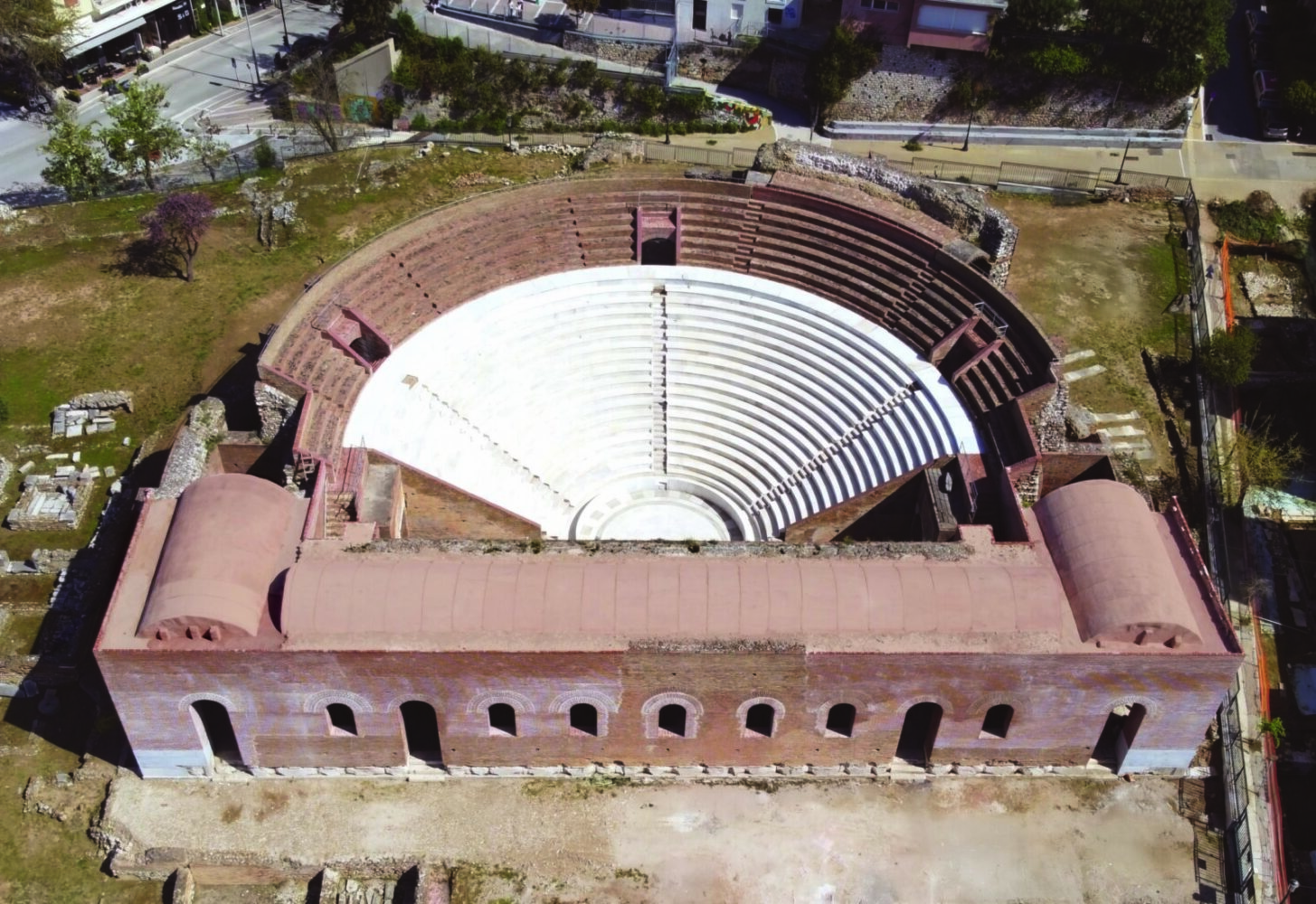
The Roman Odeon of Patras was constructed in the first half of the 2nd century AD, predating the Odeon of Herodes Atticus in Athens (161 AD), and is said to have had the finest architectural decoration after the latter. It ceased to be used towards the end of the 3rd century AD, following a devastating fire, possibly associated with the incursion of the Heruli.
The Odeon occupies an elevated position in the Upper Town, west of the ancient acropolis and the medieval castle, between Germanou and Sotiriadou Streets.
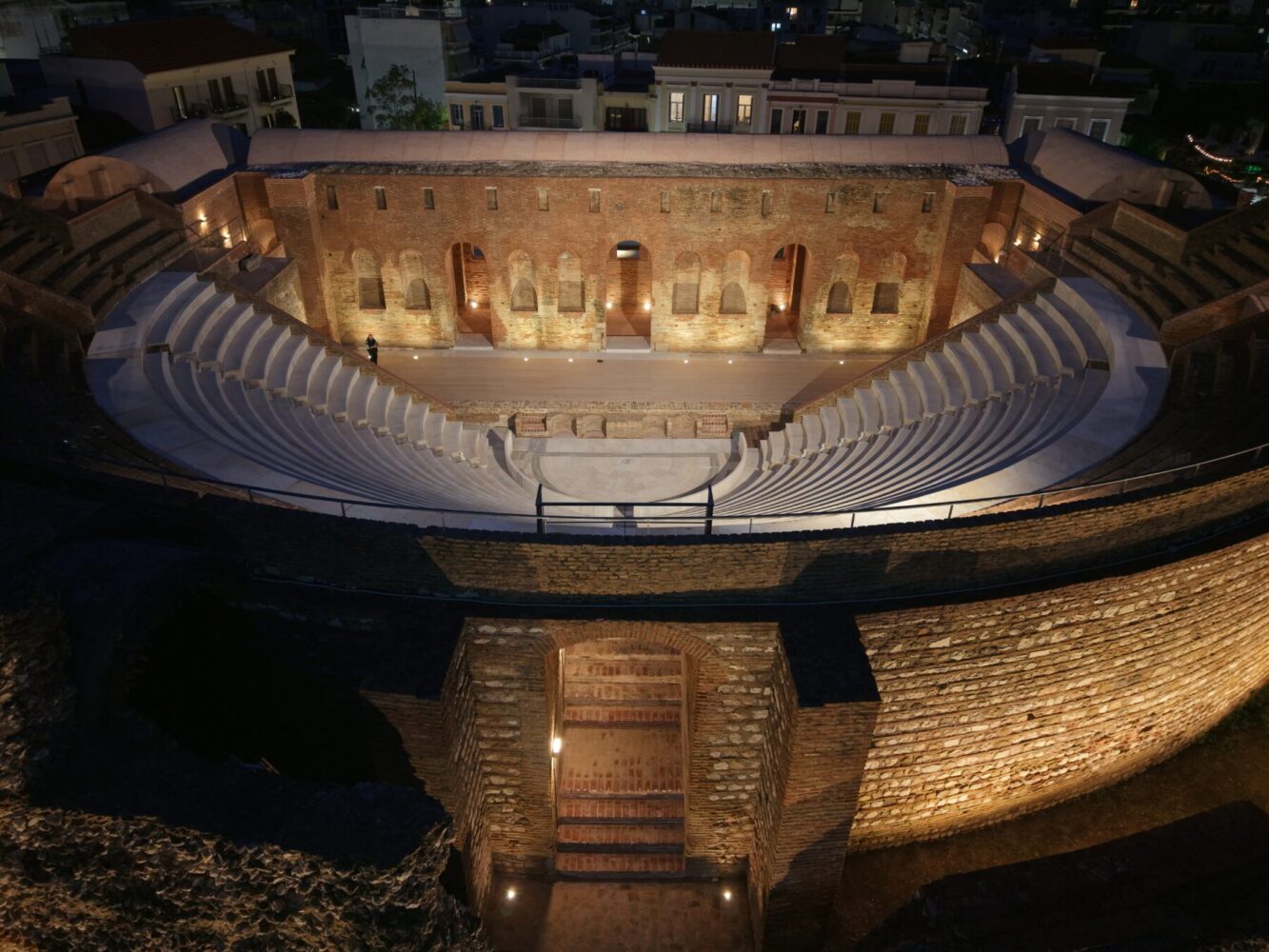
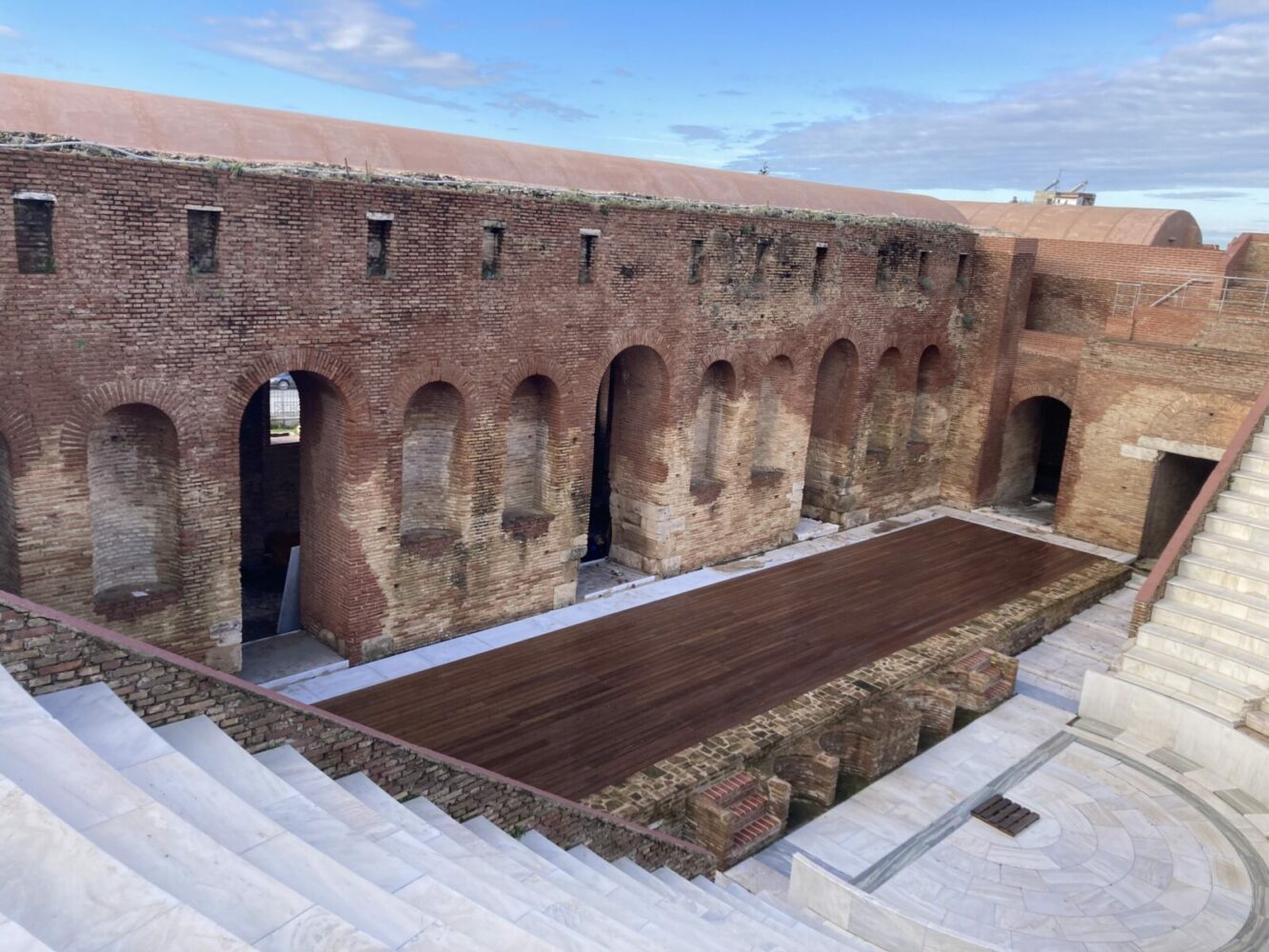
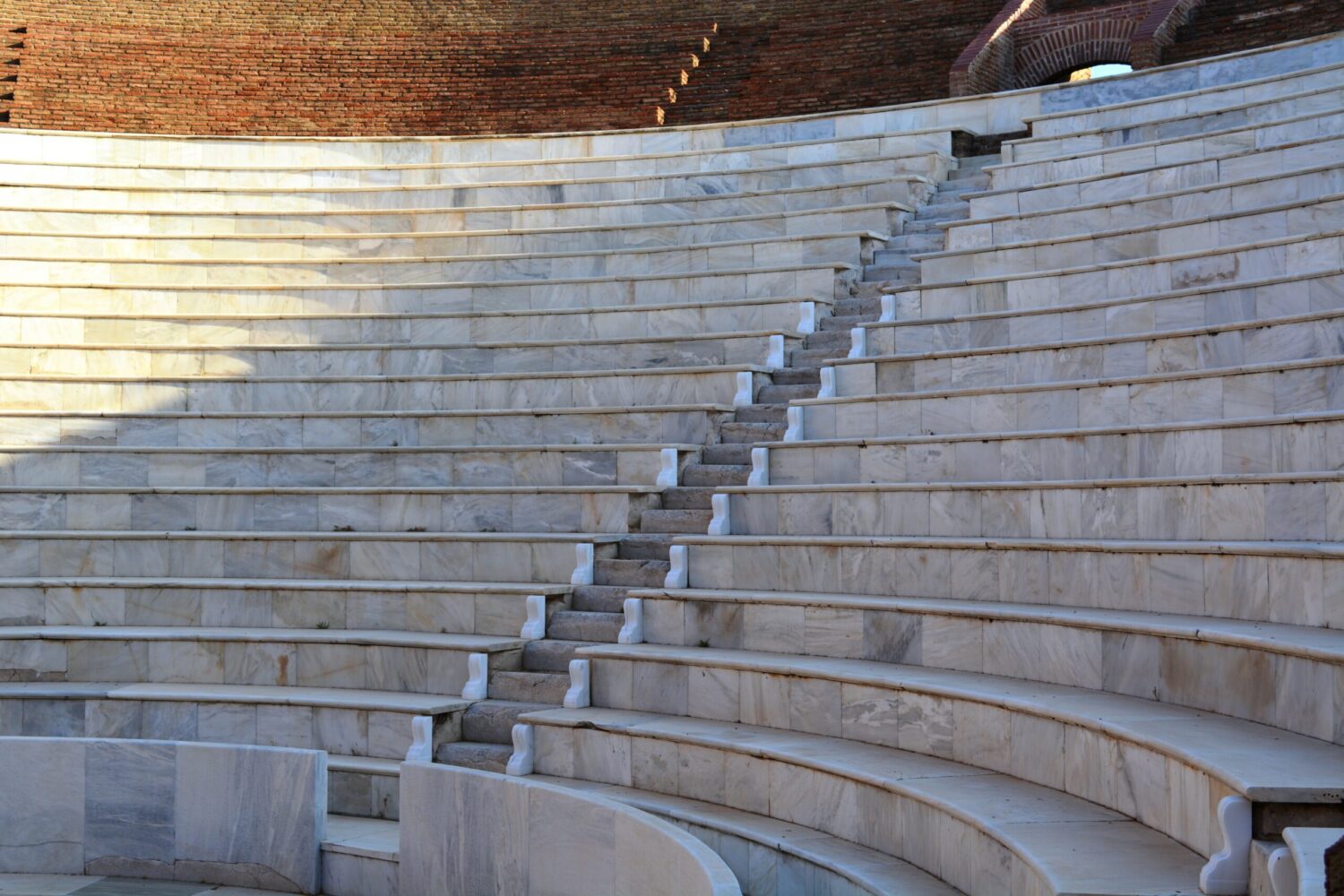
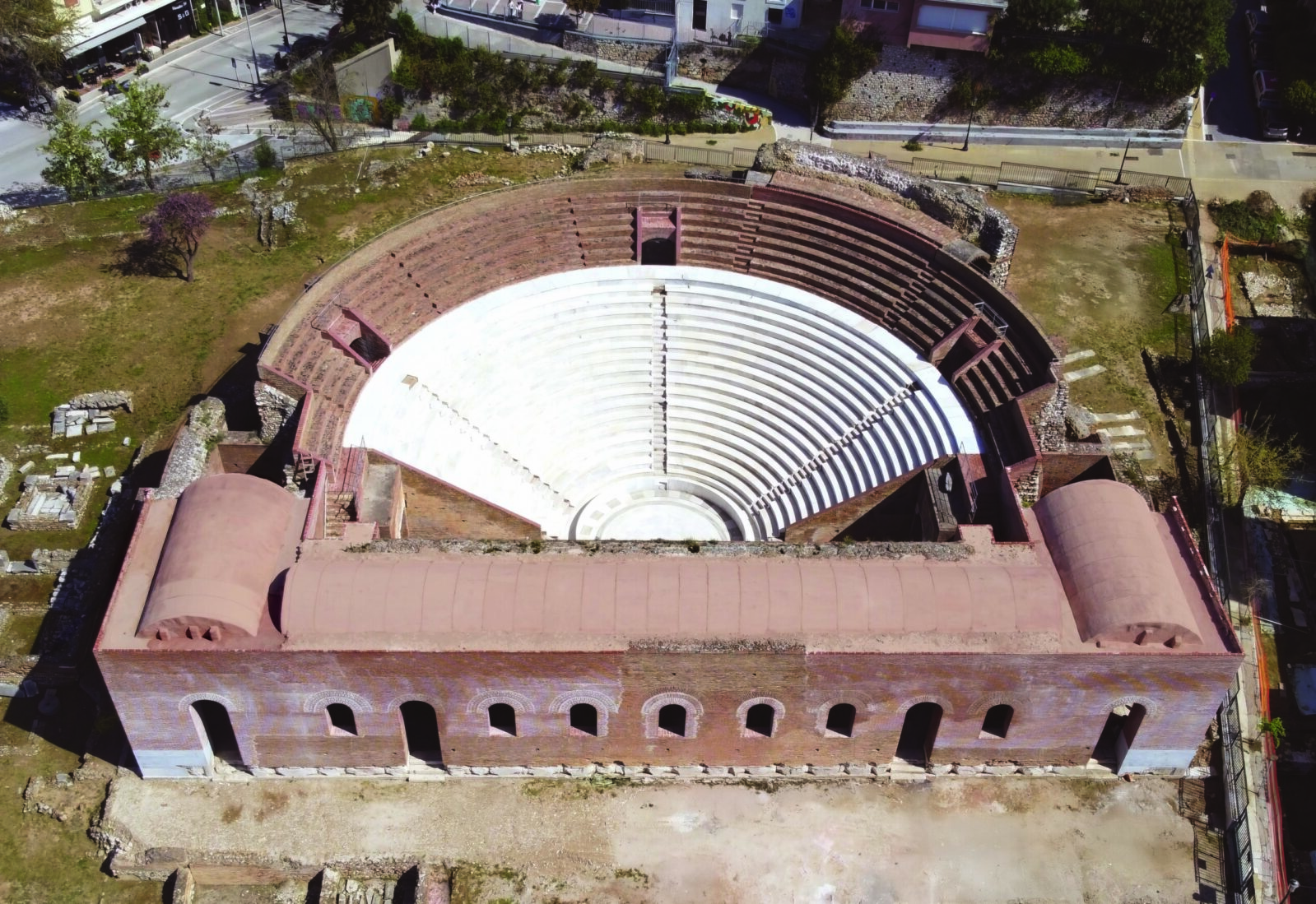
The high external wall of the stage formed the southern façade of the Odeon and featured five entrances leading onto the stage and two providing access to the backstage areas. The stage platform (proskenion) was accessible via two built lateral staircases. The orchestra was paved and separated from the auditorium (cavea) by a semicircular parapet. The cavea opens towards the south, while the stage floor was decorated with a mosaic.
Like the Stadium, the Odeon was richly decorated with statues. Nearby stood the temples of Aphrodite and Nemesis, as well as the sanctuary of Dionysus Kalydonius. The Odeon, which was adjacent to the ancient agora, housed a statue of Apollo, made from the spoils of the war against the Gauls in 279 BC, during which Patras had supported the Aetolians. Comparable structures have been identified in Rome and Asia Minor.
The Roman Odeon was accidentally discovered in 1889, during excavation works carried out in connection with the filling of the harbour. Its restoration and reconstruction in marble were completed in 1961, restoring the monument to its original appearance. Today, the Odeon can accommodate approximately 2,500 spectators and is used for performances and cultural events held as part of the Patras Festival.
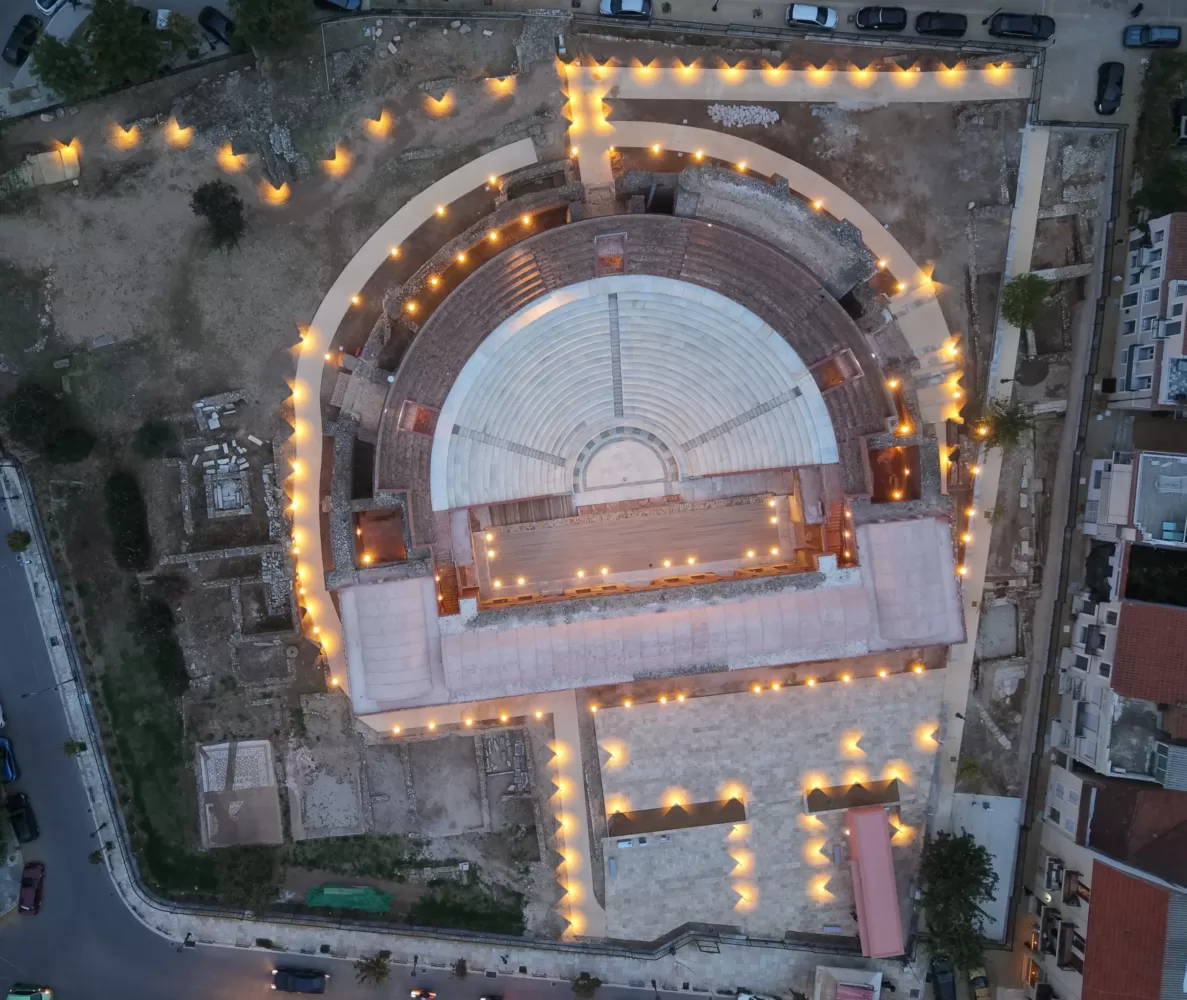
The area surrounding the Odeon displays sarcophagi, mosaics and other archaeological finds dating from antiquity, which were transferred there following their discovery during archaeological excavations in Patras.
In November 2025, the Roman Odeon was returned to the people of Patras, fully restored and reinstated in its original function. It is the only monument of its kind in Greece whose stage building has been fully restored and reconstructed.
The project was implemented by the Hellenic Ministry of Culture, through the Ephorate of Antiquities of Achaia, with funding from the NSRF Operational Programmes “Western Greece” 2014–2020 and 2021–2027 of the Region of Western Greece, with a total budget of €1.41 million.
Located within the urban fabric of Patras, the monument—together with the Roman Stadium, which was returned to the public in 2023 as a fully accessible archaeological site—has regained its architectural form and its original grandeur. It is now protected, open to visitors, and fully accessible to persons with disabilities and people with mobility or other access difficulties.
Photos